Author as Mentor Blog Lesson Five
Focus Trait: Organization
Support Trait: Idea Development
Grade Level: 7-12
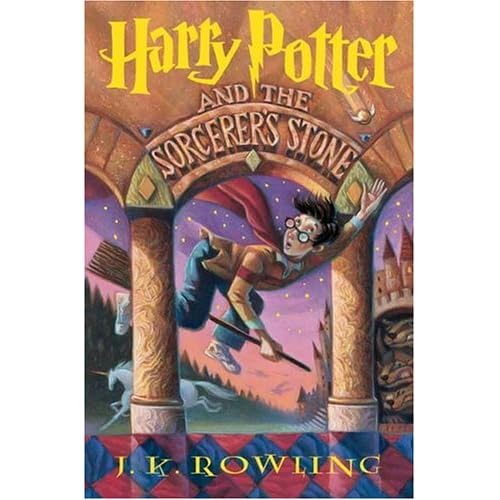
Mentor Text: Harry Potter and the Sorcerer’s Stone by J.K. Rowling
Ohio Department of Education Academic Content Standards for Language Arts:
11-12 Program pg. 174: Writing: Writing Processes, A. Formulate writing ideas and identify a topic appropriate to the purpose and audience.
11-12 Program pg. 174: Writing: Writing Processes, B. Select and use an appropriate organizational structure to refine and develop ideas for writing.
11-12 Program pg. 174: Writing: Writing Processes, C. Use a variety of strategies to revise content, organization and style, and to improve word choice, sentence variety, clarity and consistency of writing.
11-12 Program pg. 174: Writing: Writing Processes, D. Apply editing strategies to eliminate slang and improve conventions.
11-12 Program pg. 174: Writing: Writing Applications, B, Write responses to literature that provide an interpretation, recognize ambiguities, nuances and complexities and that understand the author’s use of stylistic devices and effects created.
11-12 Program pg. 174: Writing: Writing Conventions, A. Use correct spelling conventions.
11-12 Program pg. 174: Writing: Writing Conventions, B. Use correct punctuation and capitalization.
11-12 Program pg. 174: Writing: Writing Conventions, C. Demonstrate understanding of the grammatical conventions of the English language.
Author Bio:
- Joanne Rowling was born in Yate, near Bristol, a few miles south of a town called Dursley ("Harry Potter"'s Muggle-family). Her father Peter Rowling was an engineer for Rolls Royce in Bristol at this time. Her mother, Anne, was half-French and half-Scottish. They met on a train as it left King's Cross Station in London. Her sister Diana is about 2 years younger than Joanne. In 1971, Peter Rowling moved his family to the nearby village of Winterbourne (still in the Bristol vicinity). During the family's residence in Winterbourne, Jo and Di Rowling were friends with neighborhood children, Ian and Vikki Potter. In 1974, the Rowling family moved yet again, this time to Tutshill, near the Welsh border-town of Chepstow in the Forest of Dean and across the Severn River from the greater Bristol area. Rowling admits to having been a bit of a daydreamer as a child and began writing stories at the age of six.
 After leaving Exeter University, where she read French and Classics, she started work as a teacher but daydreamed about becoming a writer. One day, stuck on a delayed train for four hours between Manchester and London, she dreamed up a boy called "Harry Potter". That was in 1990. It took her six years to write the book. In the meantime, she went to teach in Portugal, married a Portuguese television journalist, had her daughter, Jessica, divorced her husband and returned to Britain when Jessica was just three months old. She went to live in Edinburgh to be near her sister, Di. Her sudden penury made her realize that it was "back-against-the-wall time" and she decided to finish her "Harry Potter" book. She sent the manuscript to two agents and one publisher, looking up likely prospects in the library. One of these agents that she picked at random based on the fact that she liked his name, Christopher Little, was immediately captivated by the manuscript and signed her on as his client within three days. During the 1995-1996 time-frame, while hoping to get the manuscript for "Harry Potter & The Philosopher's Stone" published, Rowling worked as a French teacher in Edinburgh. Several publishers turned down the manuscript before Bloomsbury agreed to purchase it in 1996.
Book Summary:
A Magical Animal Encounter
(writing a three-part story about meeting an animal with special powers)
Teacher Instructions:
Pre-step…before sharing the published model:
- Ask students, “Has there ever been a time in your life when you met an animal that was talented in a way that surprised you? Brainstorm interesting animal talents as a whole class. Choose one talent and ask, "What animal might have this talent?" As a class, brainstorm what an encounter with the magical might be like. What would it sound like? Look like? Feel like?
- Out loud, invent a simple three-part story in front of your students. Using spontaneous interesting details, act out 1) where you are when you see the animal, 2) what the animal is specifically doing when it performs its "magical" behavior, and 3) how the animal reacts when it sees you are watching it.
Step one (sharing the published model):
- Share from chapter two of Harry Potter and the Sorcerer's Stone: The Vanishing Glass, specifically pages 26-30, where Harry encounters the boa constrictor.
- Since the focus of this writing exercise is idea development, focus on the details while the snake is magically communicating with Harry. When done, write the best descriptions--like "glistening brown coils”--where everyone can see them. Talk how Rowling's chapter tries to paint a picture in readers' minds as they read, and your students will be writing a three-part description that does the same.
Step two (introducing student models of writing):
- In small groups, have your students read and respond to any or all of the student models that come with this lesson. The groups will certainly talk about the organization, since that's the focus of this lesson, but you might also have your students talk about the idea development in the writing too.
Step three (thinking, talking, and pre-writing):
- Students first need to choose an animal and a special skill for their animal. Have your students compile a list of animals, magical or ordinary, they might encounter in their stories, but they could certainly think up animal ideas on their own. Just don't let them choose to write about a snake, since that was used within the mentor text.
- Tell students their stories will have three parts: 1) a detailed description of where they (the narrator) are when they encounter the animal; 2) a detailed description of the animal performing its special skill and; 3) a description of how the animal reacts when it sees it is being watched by the narrator.
- You might want to spontaneous act out another example, or revive your example from the pre-step above, so your students can hear all three parts aloud.
- Have students talk about what details they might share if their stories had three parts. As they talk, encourage them to share an equal amount of details in each of their stories' three parts.
- Then pass out this story-planning graphic organizer, which will help them plan and compose a rough draft.
- When graphic organizers are completed, have students create an official rough draft on lined paper, encouraging them to add/edit even better words as they transfer the ideas from their organizer to lined paper. If you use this Drafting Sheet, students will be reminded to think further about idea development while they are composing. Have students highlight words and phrases they changed or added as they transferred their stories to lined paper.
Step four (editing for conventions):
- After students apply their revision ideas to their drafts and re-write neatly, require them to find an editor. With yellow high-lighters in hand, each peer reads for and highlights suspected errors for just one item from the Editing Post-it.
Student Instructions:
- You’ll be writing a descriptive paragraph of an animal that has magic, a unique talent, or a special power. Think about the boa constrictor that Harry met in the zoo; it was unique and interesting. Model your amount of details after the chapter from the first book about Harry Potter.
- Step #1 Look at the list gathered by your classmates to create an animal with unique--almost "magical"-- skills. Imagine where you might be when you encounter this animal, and imagine details you would need to share to show a reader exactly how this animal looked when it did its magical behavior. And think about what the animal would do if it noticed you watching it.
- Step #2 Plan your story, using the graphic organizer the teacher will give you. The graphic organizer will help you know when to make a new paragraph in your writing.
- Step #3 Write your three-part description on your own paper. Use a highlighter to show where you added interesting adjectives or adverbs that weren't on your original graphic organizer.
- Step #4 Revise your story and make it even better. Publish your story with an original picture.
- Rescued from the outrageous neglect of his aunt and uncle, a young boy with a great destiny proves his worth while attending Hogwarts School of Witchcraft and Wizardry.

No comments:
Post a Comment