Author as Mentor Blog Lesson Four
Focus Trait: Idea Development
Support Trait: Word Choice
Grade Level: 9-12
Mentor Text: The Subtle Knife by Philip Pullman
Ohio Department of Education Academic Content Standards for Language Arts:
- 11-12 Program pg. 174: Writing: Writing Processes, A. Formulate writing ideas and identify a topic appropriate to the purpose and audience.
- 11-12 Program pg. 174: Writing: Writing Processes, B. Select and use an appropriate organizational structure to refine and develop ideas for writing.
- 11-12 Program pg. 174: Writing: Writing Processes, C. Use a variety of strategies to revise content, organization and style, and to improve word choice, sentence variety, clarity and consistency of writing.
- 11-12 Program pg. 174: Writing: Writing Processes, D. Apply editing strategies to eliminate slang and improve conventions.
- 11-12 Program pg. 174: Writing: Writing Applications, B, Write responses to literature that provide an interpretation, recognize ambiguities, nuances and complexities and that understand the author’s use of stylistic devices and effects created.
- 11-12 Program pg. 174: Writing: Writing Conventions, A. Use correct spelling conventions.
- 11-12 Program pg. 174: Writing: Writing Conventions, B. Use correct punctuation and capitalization.
- 11-12 Program pg. 174: Writing: Writing Conventions, C. Demonstrate understanding of the grammatical conventions of the English language.
Book Summary:
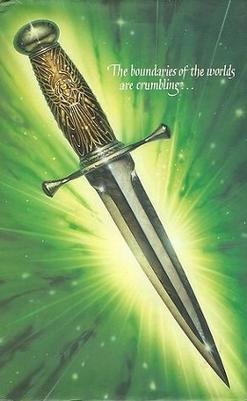 The Subtle Knife is the second book in the three-volume His Dark Materials series and continues the story of the conflict between the Authority, personified by the Church, that demands humility and submission from all creatures and those who rebel against the Authority's control. This book introduces the character of Will Parry, a twelve-year-old boy who stumbles into another world by accident. Will joins Lyra, the protagonist from the first book in the trilogy, and even though they have different goals and objectives at first, they discover that they are both an integral part of the same battle.
Author Bio: 
- Philip Pullman was born in Norwich on 19th October 1946. The early part of his life was spent travelling all over the world, because his father and then his stepfather were both in the Royal Air Force. He spent part of his childhood in Australia, where he first met the wonders of comics, and grew to love Superman and Batman in particular.
- After he left school he went to Exeter College, Oxford, to read English. He did a number of odd jobs for a while, and then moved back to Oxford to become a teacher. He taught at various middle schools for twelve years, and then moved to Westminster College, Oxford, to be a part-time lecturer. He taught courses on the Victorian novel and on the folk tale, and also a course examining how words and pictures fit together. He eventually left teaching in order to write full-time.
Creating a Parallel World
(using similarities and differences when describing a parallel world)
Teacher Instructions:
Pre-step…before sharing the published model:
- Have a discussion with your students to remind them what similarities and differences are. Discuss the importance of looking for thoughtful similarities and differences, which means ones that can be talked about in depth. If asked to find a similarity between The Golden Compass and The Subtle Knife, for example, saying "Both have page numbers" is not anything that can be talked about with depth, but saying "Both are about saving the world and about saving the soul" could be.
- Give students two topics you've been studying and have them come up with one DEEP DIFFERENCE and a DEEP SIMILARITY between the two topics. For fun, you might have them also come up with a SHALLOW DIFFERENCE and a SHALLOW SIMILARITY.
Step one (sharing the published model):
- Read pages 14 – 24 (in our paperback edition) of Philip Pullman’s The Subtle Knife to your class. If you have a different copy, this section begins when Will observes a cat vanish into a parallel world. He proceeds to follow it through a portal, and ends up in this parallel world. He soon meets Lyra, who has also entered this parallel world from her own world. They soon discover that though many things are similar to all three worlds, there are some differences. The reading selection that is important for this lesson ends after they eat a meal.
- After reading this selection, create a master list of similarities and differences on your board or overhead. Point out that the differences don’t have to be “big” things (Lyra doesn’t have baked beans in her world, for example), but they want to make sure they don't just look for "small" and easy things. Encourage them to find both big and small similarities and differences.
- You may want to have a discussion about things that they would like to change about our world if they could (both big and small) as these might be interesting elements to base their parallel world on.
- Tell your students that they will be creating an original narrative with a main character, who enters a parallel world. Their character will have a goal to achieve in the story, and students will have to determine what will be similar and what will be different about this parallel world as they take their character on his/her adventure.
Step two (introducing student models of writing):
- In small groups, have your students read and respond to any or all of the student models that come with this lesson. The groups will certainly talk about the idea development, since that's the focus of this lesson, but you might also have your students talk about the word choice in the writing too.
Step three (thinking and pre-writing):
- As students plan to begin writing, they may certainly use the similarities and differences noted in The Subtle Knife, but they shouldn’t stop there. Their first step is to determine who their character is and what he or she is going to do in the narrative.
- Once students have a character and plot idea determined, they will be better prepared to start coming up with similarities and differences for the parallel world. Have them use this graphic organizer's "Similarity and Difference Grid" to begin jotting down ideas. They can also use ideas from the master list you created together from the book.
- Students should create outlines or storyboards before creating their rough drafts; they should also talk with fellow students about how their stories are coming along in the planning before they begin writing. Use your own methods for outlines or storyboards, if you agree. The "Event Planner" on the graphic organizer to have writers map out their story plots.
- The last piece of the graphic organizer is the Word Bank. Students should brainstorm some higher-level verbs and adjectives to incorporate into their narratives before they begin writing. Have them record these on the graphic organizer so they don’t have to be sitting in front of a computer when they start their rough draft. If you aren’t going to use a computer lab where students can access the interactive buttons, you can have a brainstorming session with your students to create a word bank. You may want to refer to vocabulary and/or a word wall that you have used throughout the year for additional ideas.
- When students are ready to move from the graphic organizer to the rough draft, you might have them use this Drafting Worksheet with Idea Development Checklist. It is designed to have them continue thinking about the focus trait--idea development--before, during, and after they compose their rough drafts.
Step four (editing for conventions):
- After students apply their revision ideas to their drafts and re-write neatly, require them to find an editor. With yellow high-lighters in hand, each peer reads for and highlights suspected errors for just one item from the Editing Post-it.
Student Instructions:
- Today, you will create a story where one character leaves our world and enters a parallel world, where many things are the same as they are to us, but where there are some interesting differences. The fun part is that you get to create both an original main character, and you get to create an original parallel world. What will be the same? What will be different? What objects will not be in the parallel world that we have in ours? Will there be things in the parallel world that we haven't ever seen?
- Step 1: Determine who your main character is and what his or her goal is going to be in your story. Pick a character and a goal. You can always create your own!
- Step 2: Once you know what your story will be about, and using The Subtle Knife as inspiration, brainstorm some things that will be the same in the parallel world as we have in ours. In Pullman’s story, Will sees shops, cafes, streets, food, and drink that he recognizes.
- Step 3: Next, determine what will be different in the parallel world. In The Subtle Knife, Lyra does not recognize soda-pop or baked beans, for example. Brainstorm a list of things that we have that the parallel world does not have; also think about things that we don’t have that the parallel world might have. Use your imagination – create fun and interesting things in your parallel world! Maybe there are similar objects, but they have different names in the parallel world. Be creative!
- Step 4: Create an outline for a rough draft OR draw a few pictures to storyboard what is going to happen in your narrative.
- Step 5: Write your rough draft! Prepare to share it with a friend.
- Step 6: Revise and publish your final draft.

No comments:
Post a Comment